Description
The Colombian Chapter of the Youth Parliament for Water of Latin America and the Caribbean is pleased to share two new contributions exploring some of the most pressing water and climate challenges affecting Colombia today.
From the urban water paradox faced by communities in Quibdó to the growing impacts of climate variability and climate change across the country, these articles highlight the importance of understanding the social, institutional, and environmental dimensions of water governance and climate risks. Together, they reflect the commitment of young professionals and researchers to advancing dialogue, awareness, and innovative solutions for a more resilient and sustainable future.
We invite you to discover these reflections and analyses developed by members of the Colombian Chapter.
Quibdó Water Paradox: Institutional Constraints in Urban Water Management
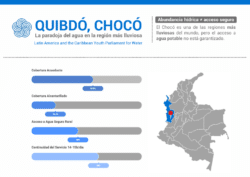
The Colombian Chapter of the Youth Parliament for Water of Latin America and the Caribbean presents its first contribution on the topic of water and sanitation in urban contexts. On this occasion, we invite you to travel to Quibdó, Colombia:
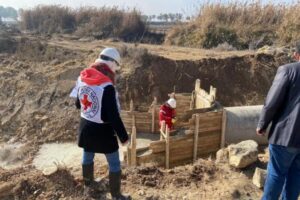
In Quibdó, one of the rainiest regions in the world, access to drinking water remains limited, revealing a paradox that challenges the way we understand water management in urban contexts in the Global South. In this case study, we explore how scarcity is not due to a lack of water resources, but to institutional, financial, and governance constraints that reduce the “space for change” to transform rainfall abundance into sustainable water and sanitation services. Starting from the Triple A (authority, acceptance, and ability) framework, we analyze the current state of the system, the role of community solutions, and opportunities to build hybrid models that integrate rainwater harvesting, nature-based solutions, and institutional strengthening.
We invite you to learn about this analysis of the water paradox in Quibdó and the possible ways to expand the space for change in this context!
Authors : Santiago Gómez , Juliana Berrío Uribe, Laura Enríquez, Laura Carolina , Mecón Torres, Angelica Andrea Díaz Gil, Gabriela Bermúdez Gutiérrez
Climate risks and socio-environmental impact : understand the difference between climate variability and climate change
The Colombian Chapter of the Youth Parliament for Water of Latin America and the Caribbean presents its first contribution on the topic of climate risks and socio-environmental impact. On this occasion, we invite you to understand the difference between climate variability and climate change, with examples specific to the Colombian context:
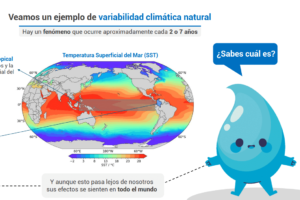
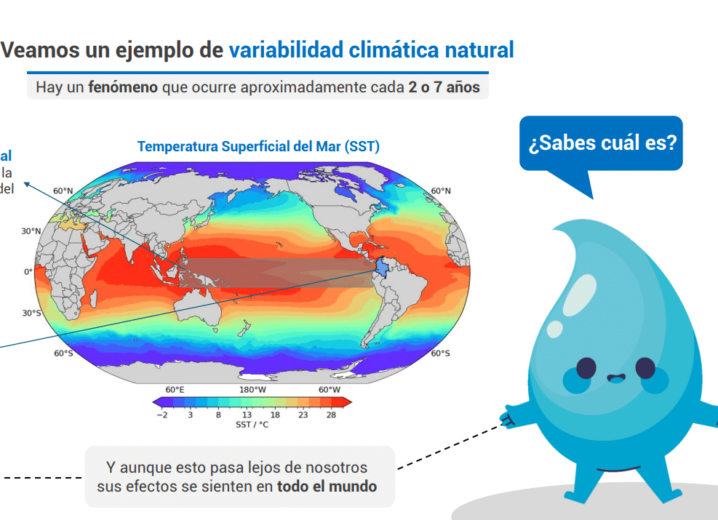
¿Sabías que los cambios en el clima no se deben exclusivamente al cambio climático?
También existen cambios debido a procesos naturales del sistema climático.
Por un lado, tenemos la variabilidad climática natural, y por otro lado, está el cambio climático.
En el siguiente post te contamos qué es la variabilidad climática natural, qué es el cambio climático y cómo afectan a Colombia
¿Quieres revisar si entendiste ambos conceptos? Aquí te dejamos algunas preguntas :
1. ¿Cuál de estas opciones describe la variabilidad climática natural?
A) Es causada principalmente por actividades humanas
B) Genera cambios temporales que tienden a volver a un equilibrio
2. ¿Y cuál genera cambios a largo plazo?
A) La variabilidad climática natural
B) El cambio climático
3. ¿Cuál puede generar eventos extremos?
A) El cambio climático
B) La variabilidad climática natural y el cambio climático
El Parlamento de Jóvenes por el Agua de Latinoamérica y el Caribe es una red de jóvenes comprometidos con enfrentar los desafíos que los riesgos climáticos representan en nuestra región.
#CambioClimático #Colombia #ENSO #ElNiño #LaNiña #Agua #Juventud
Authors: Gicela Vergara Juliana Berrío Uribe Laura Carolina Mecón Torres Juan Felipe Navas Sarmiento Daniel Matteo G. Bryan D. Cancimance-Niño Santiago Gómez